

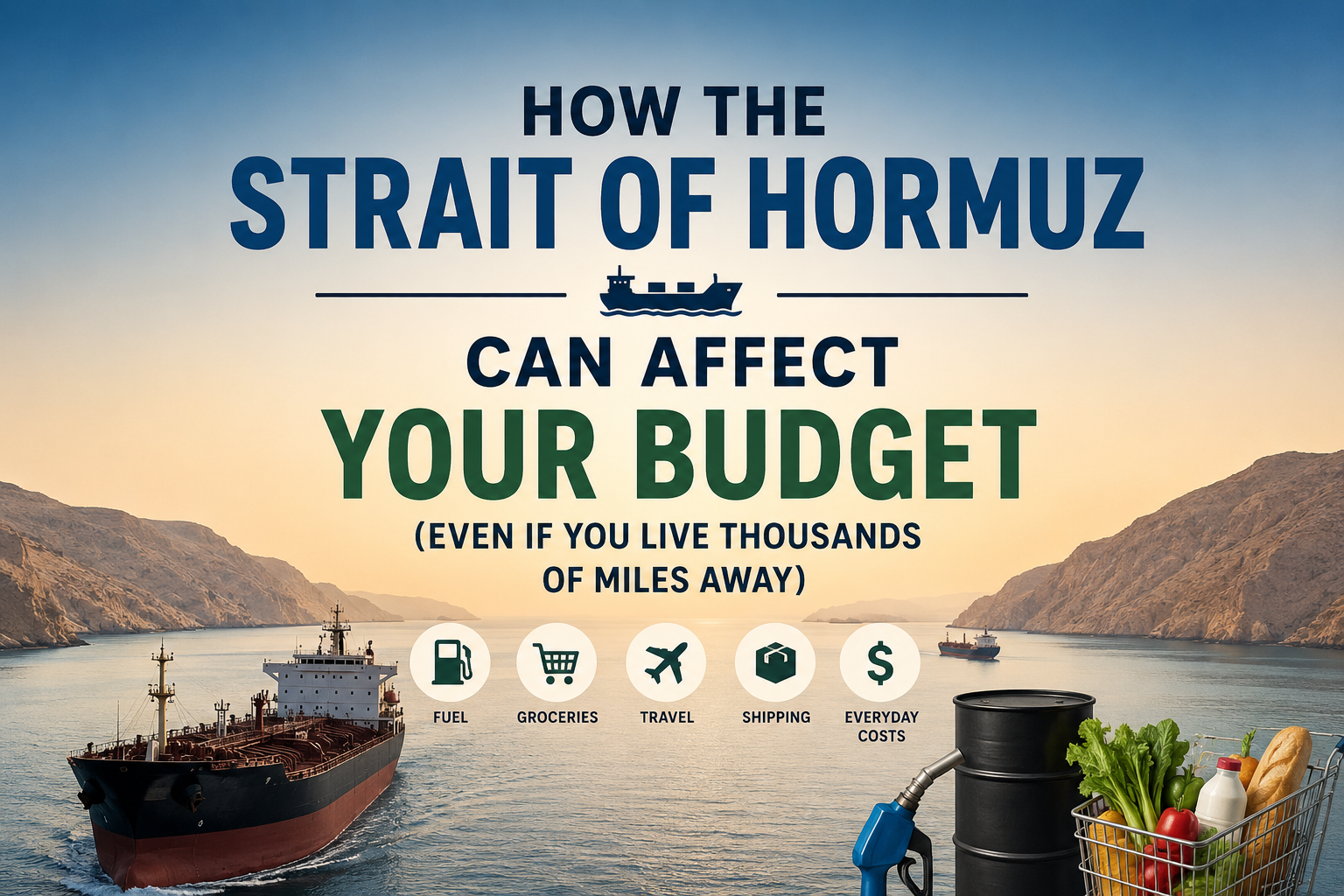
When news headlines mention the Strait of Hormuz, it can sound like something happening on the other side of the world—far removed from your daily life.
But if you’ve ever wondered why gas prices suddenly jump, groceries become more expensive, or airline tickets cost more, events in this narrow stretch of water can play a surprisingly important role.
This isn’t about politics.
It’s about understanding how global events can influence your personal finances—and how a little preparation can help protect your budget.
What Is the Strait of Hormuz?
The Strait of Hormuz is one of the world’s most important shipping routes.
A significant portion of the world’s oil and liquefied natural gas travels through this narrow passage every day. If shipping slows down or stops for any reason, global energy markets often react quickly.
Even countries that don’t buy oil directly from the region can feel the effects because energy is traded in a global market.
When supply becomes uncertain, prices often rise.
Why Your Budget Might Feel the Impact
You don’t have to drive a gas-powered vehicle every day to be affected.
Energy prices influence almost everything we buy.
Here are some of the areas where you may notice changes.
Fuel Costs
This is usually the first place people notice.
If oil prices rise, gasoline and diesel prices often follow.
That means higher costs for:
- Driving to work
- Weekend trips
- School drop-offs
- Deliveries
- Public transportation in some regions
For a household filling two vehicles each week, even a modest increase at the pump can add hundreds of dollars over several months.
Grocery Bills
Food doesn’t magically appear on grocery store shelves.
It must be:
- Grown
- Harvested
- Processed
- Refrigerated
- Transported
Each step requires energy.
Higher transportation and production costs can eventually show up as higher grocery prices.
While not every product increases immediately, widespread increases in fuel costs often ripple throughout the food supply chain.
Online Shopping and Deliveries
That package arriving at your front door likely traveled by truck, ship, airplane—or all three.
Higher transportation costs can mean:
- Increased shipping fees
- Higher product prices
- Reduced promotional discounts
- Longer delivery times in some cases
Retailers may absorb some of these costs, but not forever.
Travel Expenses
Planning a vacation?
Airlines are particularly sensitive to fuel prices.
When fuel becomes more expensive, you may notice:
- Higher airfare
- Increased vacation package costs
- Rental car price increases
- More expensive cruises
Booking early and budgeting ahead becomes even more valuable during periods of uncertainty.
Everyday Goods
Many household items are manufactured overseas or shipped long distances.
That includes things like:
- Electronics
- Furniture
- Clothing
- Appliances
- Home improvement supplies
Transportation is part of the cost of nearly everything we purchase.
What You Can Do Instead of Worrying
Global events are outside your control.
Your financial habits aren’t.
Rather than reacting emotionally to headlines, focus on strengthening your budget.
1. Review Your Monthly Spending
Take five minutes to see where your money is going.
If fuel prices rise, knowing your current transportation spending makes it much easier to adjust before your budget gets stretched.
Small changes today are often easier than large cuts later.
2. Build a Small Buffer
You don’t need a massive emergency fund overnight.
Even setting aside enough to cover one month of higher fuel or grocery costs can reduce financial stress if prices climb.
Think of it as giving your future self a little breathing room.
3. Delay Non-Essential Purchases
If you’re planning to buy something large—like furniture or electronics—it may be worth watching prices for a while.
Sometimes prices stabilize after initial market reactions.
If the purchase isn’t urgent, waiting can save money.
4. Keep Your Grocery Budget Flexible
Instead of budgeting the exact same grocery amount every month, leave yourself a little room for unexpected price changes.
A flexible budget is often more realistic than a perfectly fixed one.
5. Avoid Panic Spending
When headlines become dramatic, it’s easy to make emotional financial decisions.
Buying months of supplies you don’t need or making large purchases “before prices go up” can actually hurt your finances.
Stick to your plan.
A good budget is designed to handle uncertainty.
Remember: Markets Move Both Ways
It’s important to remember that prices don’t only move upward.
Energy markets constantly respond to changes in supply, demand, production, and global conditions.
Sometimes prices rise quickly.
Sometimes they settle back down just as fast.
That’s why long-term financial habits matter more than reacting to short-term headlines.
The Bottom Line
Events happening thousands of kilometres away can eventually influence the price of filling your car, buying groceries, booking a vacation, or replacing household items.
While you can’t control global events, you can control how prepared your budget is.
A well-planned budget won’t stop prices from rising—but it can make those increases far less stressful when they happen.
The goal isn’t to predict the future.
It’s to build financial habits that help you stay confident no matter what the headlines say.
That’s exactly what budgeting is all about.
Stay One Step Ahead of Rising Costs
You can’t control global events, but you can control how you prepare for them.
Whether fuel prices rise, groceries become more expensive, or everyday costs start creeping up, having a clear view of your finances makes it much easier to adapt without feeling overwhelmed.
That’s where Do Budget comes in.
With Do Budget, you can:
-
📊 Track your spending in one simple place
-
💰 Create budgets that fit your lifestyle
-
🔔 Receive alerts before you overspend
-
📅 Stay on top of recurring bills and upcoming expenses
-
📈 See where your money is going with easy-to-understand charts
When unexpected events affect the cost of living, the people who know where their money is going are often in the best position to adjust.
Start building better money habits today.
👉 Create your free Do Budget account at https://www.dobudget.com and take control of your money—one budget at a time.