

Have you ever looked at your bank account and thought:
“Wait… where did all my money go?”
You didn’t buy a new TV.
You didn’t book a vacation.
You didn’t make any huge purchases.
Yet somehow your account balance is hundreds of dollars lower than you expected.
You’re not alone.
The problem isn’t always that we’re spending more.
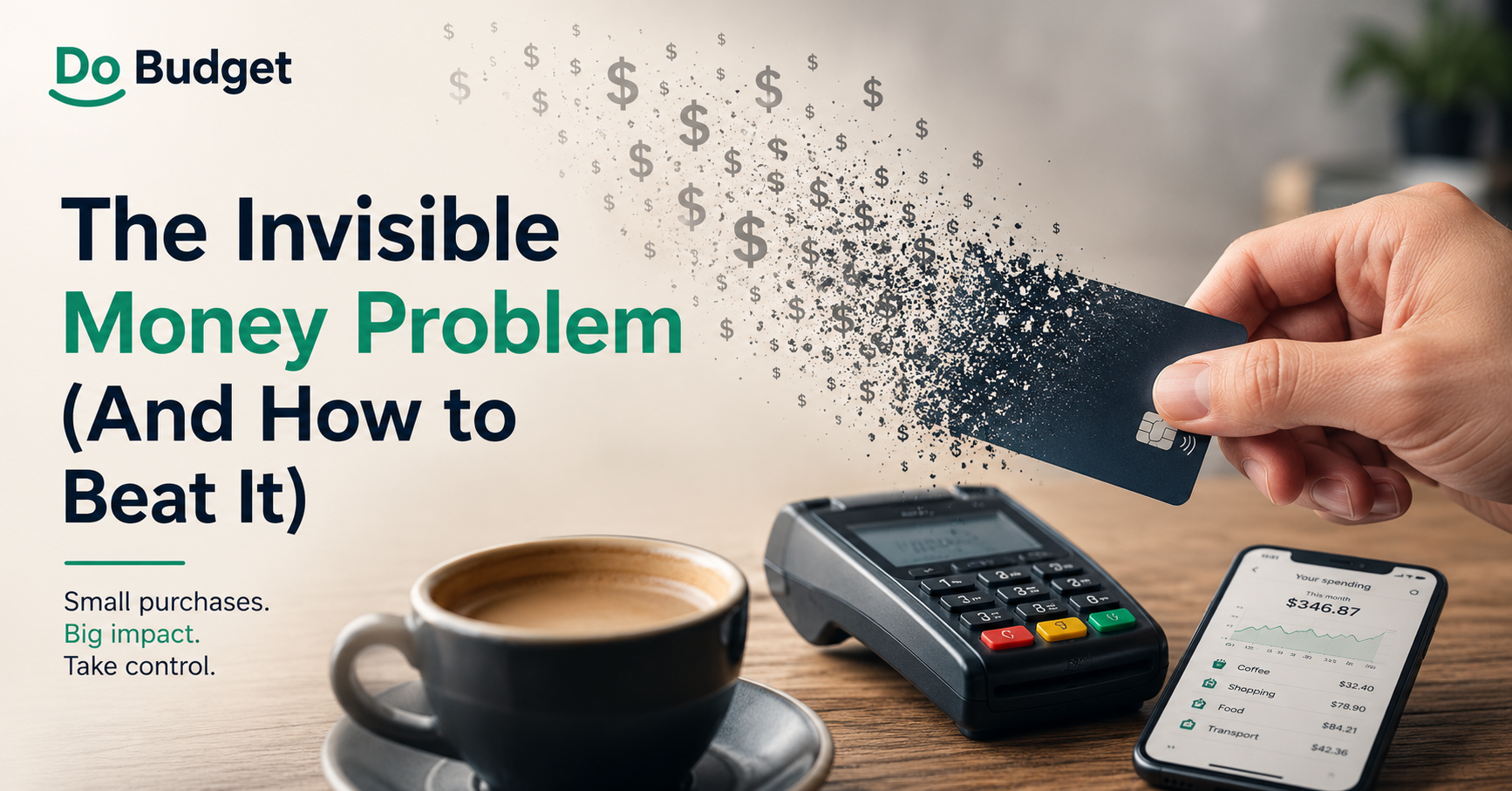
Often, it’s that modern spending has become invisible.
When Money Stops Feeling Like Money
A few decades ago, buying something usually meant handing over cash.
You watched the bills leave your wallet.
You felt the transaction.
Your wallet literally became lighter.
Today?
You tap your phone.
You click “Buy Now.”
Your coffee is paid for before you’ve even picked it up.
The purchase is complete in seconds—and your brain barely notices.
Psychologists call this the “pain of paying.” It’s the small emotional discomfort we experience when parting with our money.
Research has consistently shown that this feeling is much weaker when we pay digitally instead of with cash. When spending feels painless, it often becomes easier to spend more.
“The easier it is to spend, the harder it is to notice you’re spending.”
The Small Purchases You Never Remember
Imagine buying:
- A $6 coffee
- A $14 lunch
- A $12 streaming subscription
- A $9 app upgrade
- A $24 online impulse purchase
None of these feel expensive.
In fact, most of them barely register.
But together?
That’s $65 in a single day.
Repeat that pattern a few times each week and you’ve quietly spent hundreds of dollars without ever feeling like you were “shopping.”
This is what makes invisible spending so powerful.
It’s not one bad decision.
It’s dozens of tiny ones.
Convenience Comes With a Cost
Technology has made paying easier than ever—and that’s wonderful in many ways.
But convenience changes behavior.
With one-click checkout, saved credit cards, contactless payments, and automatic subscriptions, there are fewer moments that force us to stop and ask:
“Do I actually want this?”
The less friction there is, the more likely we are to buy on impulse.
Companies know this.
That’s why so many online stores make checkout effortless.
Every extra second you don’t spend thinking increases the chances you’ll complete the purchase.
It’s Not About Willpower
Many people assume overspending happens because they lack discipline.
That’s rarely the whole story.
Our brains naturally pay more attention to large, memorable purchases than small, routine ones.
Behavioral economists call this salience—the tendency to notice what’s obvious while overlooking what’s familiar.
That’s why you might remember buying a new laptop six months ago but struggle to recall every coffee, snack, delivery fee, and online purchase from last week.
“You don’t need a better memory—you need better visibility.”
How to Make Money Feel Real Again
The solution isn’t cutting up your credit cards.
It isn’t avoiding online shopping forever.
It’s making your spending visible again.
Here are a few simple ways to do that.
1. Track Every Purchase
Even if it’s only for one month.
Writing down every expense forces your brain to acknowledge it.
Most people are surprised by what they discover.
2. Review Your Spending Weekly
Instead of waiting until your bank account feels low, spend five minutes each week looking through your transactions.
Patterns become obvious much sooner.
3. Give Every Dollar a Job
Before your paycheck arrives, decide where your money is supposed to go.
When every dollar has a purpose, random spending becomes much easier to recognize.
4. Pause Before Buying
For non-essential purchases, try waiting 24 hours.
Many impulse purchases lose their appeal overnight.
5. Watch Categories Instead of Individual Purchases
One coffee isn’t the problem.
Neither is one meal out.
But seeing an entire month’s spending on restaurants, shopping, or entertainment provides valuable perspective.
Awareness Changes Everything
The goal isn’t to feel guilty every time you spend money.
Money is meant to improve your life.
The goal is simply to make your spending visible enough that you stay in control—not your habits.
Because once you can clearly see where your money is going, you can decide where you’d rather it go instead.
That’s when budgeting stops feeling restrictive.
It starts feeling empowering.
“Financial confidence doesn’t come from spending less. It comes from knowing where every dollar is going.”
Final Thoughts
Invisible spending happens to almost everyone.
Modern technology has made paying so fast and convenient that it’s easy to lose track of dozens of everyday purchases.
Fortunately, the solution is simple.
Bring your spending back into view.
Track it.
Review it.
Understand it.
When money feels real again, better financial decisions tend to follow naturally.
And that’s a habit that can pay off for years to come.